From the Pitch to the Gym: How to Get Fit After Stopping Sport
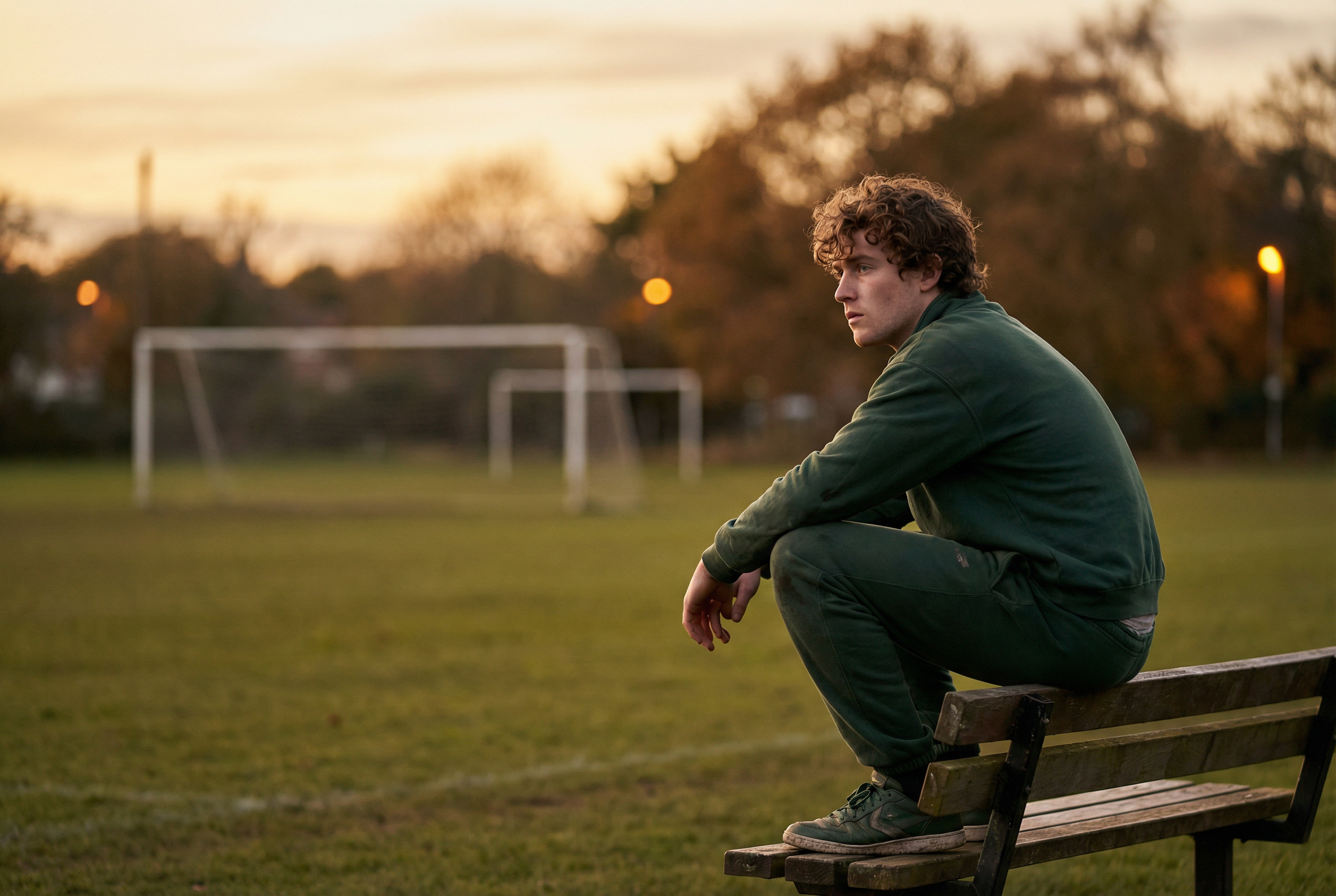
Hundreds of thousands of Irish and UK lads stopped playing sport in their late teens and early twenties. Here's the evidence-based guide to getting properly fit again — and the honest story of how I did it.
The Version of This Story I Tell at the Gym
I played football growing up. Not professionally — I wasn't that good — but seriously enough that it was the centre of my social life from about age 8 to 18. Training twice a week, matches at the weekend, summers spent on pitches. The kind of fitness that just existed as a background condition of life.
Then I stopped. College happened. A social life that involved considerably more pints than I'd been having at 16 happened. The gym was something I went to occasionally, half-heartedly, without any real structure or purpose.
By 22 I was what I'd describe as "technically fine but not actually fit." I could get through a day without dying. I couldn't run 5K without stopping. I'd lost the baseline fitness that had just been there for the first 18 years of my life, and I hadn't really noticed until I tried to do something athletic and found I couldn't.
This is not a dramatic story. I wasn't in terrible shape. I wasn't having a health crisis. I was just a normal lad in his early 20s who'd stopped playing sport and hadn't replaced it with anything. Sound familiar?
What changed at 25 was less of a dramatic moment and more of a slow accumulation of noticing. Noticing that I was tired in a way that wasn't just work. Noticing that I felt better on weeks when I trained than weeks when I didn't. Noticing that I wanted to feel capable again — not just look a certain way, but actually be able to do things.
So I started taking it seriously. And this is what I learned.
The Ex-Sport Athlete's Specific Challenge
If you played sport growing up, you have a particular set of advantages and disadvantages when returning to training as an adult.
The advantages: You have a baseline of motor patterns and athletic competence that never fully disappears. You know what it feels like to train hard. You have a competitive instinct that can be channelled productively. You understand the concept of progressive training, even if you haven't thought about it explicitly.
The disadvantages: You have a reference point for your previous fitness that can be psychologically difficult to reconcile with your current fitness. You're used to sport-specific fitness — the kind that comes from playing a game — rather than the more methodical fitness that comes from structured training. And you're probably used to training with a team, which means solo training can feel oddly purposeless at first.
The research on detraining is instructive here. Mujika & Padilla (2000) — A review in Medicine & Science in Sports & Exercise found that aerobic capacity (VO2max) decreases by approximately 4-14% within 3-4 weeks of stopping training, and by 50% within 3 months. Muscle strength decreases more slowly — approximately 7-12% within 3-4 weeks — but the neural adaptations that made you strong and coordinated can persist for years.
The practical implication: you're not starting from zero. You're starting from a reduced baseline that can be rebuilt more quickly than it was originally built. The research on "muscle memory" — more accurately described as the persistence of myonuclei in previously trained muscle — suggests that people who were previously fit regain fitness faster than those who were never fit. Your body remembers. It's just been on a long holiday.
What I Actually Did (The Honest Version)
When I started taking training seriously at 25, I made most of the classic mistakes first.
I started running too fast and got shin splints within three weeks. I went to the gym without a programme and did whatever felt right, which meant a lot of bicep curls and not enough squats. I tried to do too much too soon and burned out twice before I found a sustainable rhythm.
What eventually worked was embarrassingly simple:
Three strength sessions per week, full body, compound movements. Squat, deadlift, bench press, row, overhead press. Progressive overload tracked in a notebook. Nothing fancy.
Two to three runs per week, mostly easy. Zone 2 pace — slow enough to hold a conversation. One slightly harder session per week once the base was established.
Adequate protein. 1.6-2g per kg of bodyweight per day. This made a bigger difference than any other single change.
Consistency over intensity. Showing up four times a week for a year beats showing up seven times a week for a month and then burning out.
The results over 12 months: I went from struggling to run 5K to completing two half marathons while maintaining (and improving) my strength numbers. Not because I did anything clever, but because I was consistent with the basics.
The Mental Side Nobody Talks About
Returning to fitness after stopping sport involves a psychological adjustment that doesn't get discussed enough.
When you played sport, your fitness was a byproduct of doing something you loved with people you liked. The training was in service of the game. The game gave the training meaning.
When you're training as an adult without a team sport, the training is the thing. There's no game at the end of it. No teammates depending on you. No opposition to beat. Just you and the programme and the question of whether you're going to show up.
This is harder than it sounds, especially in the early months when progress is slow and the training feels like work rather than play.
What helped me was finding the competitive element in individual metrics. Tracking my 5K time and watching it improve. Tracking my squat and watching the weight go up. Creating the same feedback loop that sport provided, just in a different format.
It also helped to find community — a running club, a gym where you know people, an online community of people doing similar things. The social element of sport is a genuine motivator, and replacing it matters more than most people admit.
The Comeback Framework
Based on my own experience and the research on returning to training after a period of detraining, here's a practical framework for ex-sport athletes:
Weeks 1-4: Rebuild the base
- Focus on movement quality before intensity
- 2-3 strength sessions per week, moderate weight, focus on form
- 2-3 easy runs, 20-30 minutes, genuinely easy pace
- Resist the urge to go hard — your tendons and ligaments need more time to adapt than your muscles do
Weeks 5-8: Establish the habit
- Increase volume slightly (add a set, add 5 minutes to runs)
- Begin tracking progressive overload in strength sessions
- Add one slightly harder running session per week
- Focus on consistency — showing up matters more than any individual session
Weeks 9-12: Begin to push
- Increase intensity in strength sessions
- Add a tempo run or interval session
- Set a goal — a 5K race, a lifting target, a body composition goal
- The goal gives the training direction and the training gives the goal meaning
Month 3 onwards: Trust the process
- Progress will be non-linear. Some weeks will feel great. Some will feel terrible.
- The trend over months is what matters, not the trend over days.
- Keep showing up.
The Bottom Line
Getting back into fitness after stopping sport is not complicated. It's not easy, but it's not complicated. The principles are simple: consistent training, adequate protein, progressive overload, sufficient sleep.
The hard part is the psychological adjustment — accepting that you're not as fit as you were at 18, being patient with the process, and finding the motivation to train without a team or a game to play.
But here's the thing: the fitness you build as an adult, with intention and structure, is different from the fitness you had as a teenager. It's yours in a way that sport fitness never quite was. You built it deliberately. You understand why it works. And it compounds.
Start simple. Be consistent. Give it a year.
References: Mujika & Padilla (2000) Med Sci Sports Exerc; Schoenfeld (2010) J Strength Cond Res; Morton et al. (2018) Br J Sports Med
Lee O'Donnell
BSc Sports Science, TU Dublin. 2× half marathon finisher. WHOOP user. Sales professional. Writing about hybrid training for Irish and UK lads who want to get properly fit again without the preaching.
Read full story →2 Comments
Ciarán Murphy
2 days ago
Finally someone writing for lads like me. Stopped playing GAA at 20 and have been going through the motions in the gym ever since. This is exactly the kick I needed.
James Thornton
5 days ago
The interference effect section is gold. I've been running hard 4x a week and wondering why my squat numbers were going backwards. Zone 2 it is from now on.
Lee O'Donnell
4 days ago
Exactly — most people run too hard too often. Zone 2 feels embarrassingly slow at first but the gains in 8 weeks are massive. Stick with it.
The 7-Step Hybrid Training Checklist
Start training for strength and endurance the right way. Free PDF, no spam.
New to the site?
Start with the Start Here page — it'll point you to the right articles based on where you are right now.
Start HereRelated Articles
My StoryThe Irish Lad's Guide to Getting Properly Fit in Your Mid-20s
For the lad who played sport until 18, drifted through his early 20s, and now wants to get properly fit again — without the preaching, without the 5am wake-up culture, and without giving up his social life.
My StoryHow I Stay Consistent With Training in a Demanding Sales Job
Sales is unpredictable — client dinners, late calls, travel, and the mental load of targets. Here's how I've built a training system that survives the chaos of a full-time sales career.
My StoryBuilding Fitness Around a Real Social Life: The No-Preaching Guide
You don't have to choose between being fit and having a social life. Here's the evidence-based framework for building genuine fitness without giving up the things that make life worth living.
The 7-Step Hybrid Training Starter Checklist
Everything you need to start training for both strength and endurance — without burning out or losing your gains. Free, no fluff, no spam.
No spam. Unsubscribe any time. Your email stays with me.