Strength Training for Runners: The Evidence-Based Guide
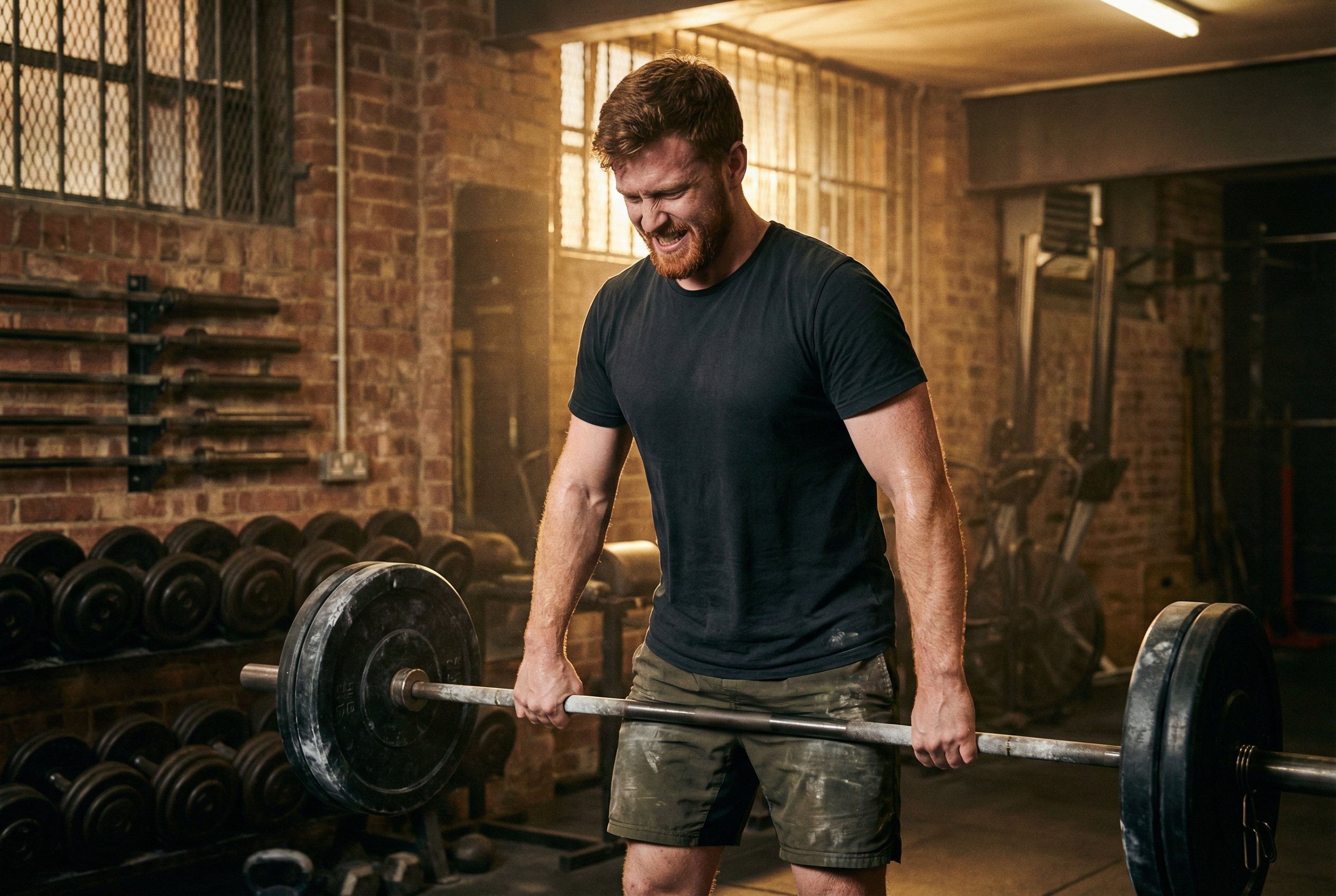
Most runners avoid the weights room. That's a mistake. The research is clear: strength training improves running economy, reduces injury risk, and makes you faster. Here's exactly what to do and why.
Why Runners Avoid the Weights Room (And Why That's a Mistake)
There's a particular type of runner who treats the gym like a foreign country. They've got their training plan, their Garmin, their gels, and their very strong opinions about foam rolling. The weights room is for other people. People who want to look big. Not people who want to run fast.
This is one of the most persistent and most costly myths in recreational running.
I'm going to make a case, using actual peer-reviewed research, that strength training is one of the highest-return investments a runner can make. Not just for injury prevention, though that matters. Not just for general health, though that matters too. But for running performance. For running economy. For the thing you actually care about: getting faster and not breaking down.
I'll also give you a practical programme at the end. But first, let's look at what the research actually says.
What Is Running Economy and Why Does It Matter?
Running economy is the oxygen cost of running at a given pace. A runner with better running economy uses less oxygen to run at the same speed as a runner with worse economy. All else being equal, better running economy means faster race times.
Running economy is determined by several factors: biomechanical efficiency, neuromuscular coordination, tendon stiffness, and the ability to store and release elastic energy in the Achilles tendon and plantar fascia. This last point is critical, because it's where strength training has its most powerful effect.
When you run, your Achilles tendon acts like a spring. It stores elastic energy during the loading phase of each stride and releases it during push-off. A stiffer, more elastic tendon returns more energy per stride, meaning you need less muscular effort to maintain pace. Strength training, specifically heavy resistance training, increases tendon stiffness and cross-sectional area.
Beattie et al. (2017) conducted a systematic review of 24 studies and found that strength training improved running economy by an average of 2-8% in recreational and competitive runners. That might sound modest. But a 2-8% improvement in running economy translates directly to faster race times. For a runner doing a 2-hour half marathon, that's 2-10 minutes off your time without running a single extra kilometre.
The Research on Strength Training and Running Performance
The evidence base here is substantial and consistent. Let me walk you through the key findings.
Storen et al. (2008) published what became one of the most cited studies in this area. Recreational runners who added half-squat training to their programme for 8 weeks improved their running economy by 5% and their time to exhaustion at maximal aerobic speed by 21.3%. The control group, who continued running only, showed no improvement in either measure. The strength training group did not get heavier. Their VO2max did not change. Their improvement came entirely from improved neuromuscular efficiency and running economy.
Blagrove et al. (2018) conducted a systematic review of 24 randomised controlled trials and concluded that heavy resistance training and plyometric training both significantly improve running economy in distance runners. The effect was consistent across recreational and competitive runners, and across different race distances from 5K to marathon.
Yamamoto et al. (2008) found that 8 weeks of circuit resistance training improved 5K time trial performance in recreational runners by an average of 4.6%. Again, no change in VO2max. The improvement was attributed to improved running economy.
The mechanism is well understood. Heavy resistance training increases motor unit recruitment efficiency, improves neuromuscular coordination, and increases the rate of force development. When you run, your foot is in contact with the ground for roughly 200-250 milliseconds. The faster and more efficiently you can generate force in that window, the better your running economy.
Strength Training and Injury Prevention
This is where the case becomes even more compelling, because injury is the single biggest barrier to running improvement. You can't get fitter if you're injured. And runners get injured a lot.
Approximately 50-75% of recreational runners sustain a running-related injury in any given year. The most common injuries are patellofemoral pain syndrome (runner's knee), iliotibial band syndrome, plantar fasciitis, shin splints, and Achilles tendinopathy. The vast majority of these are overuse injuries caused by insufficient tissue capacity relative to training load.
Strength training increases tissue capacity. It strengthens tendons, ligaments, and the muscles that support the knee, hip, and ankle. It addresses the muscular imbalances that are almost universal in runners who do nothing but run.
Lauersen et al. (2014) published a meta-analysis in the British Journal of Sports Medicine examining injury prevention interventions across multiple sports. Strength training reduced overuse injuries by 50% and acute injuries by 33%. These are not marginal effects. Cutting your injury risk in half is a bigger performance intervention than almost anything else you could do.
The specific weaknesses most runners have are well documented. Weak hip abductors and external rotators contribute to knee valgus (knees collapsing inward) during running, which is a primary driver of runner's knee and IT band syndrome. Weak calf muscles and insufficient Achilles tendon capacity contribute to Achilles tendinopathy and plantar fasciitis. Weak single-leg stability contributes to ankle injuries.
All of these are addressable with a well-designed strength programme.
What Type of Strength Training Works Best for Runners?
Not all strength training is equally effective for running performance. The research points clearly to two modalities:
Heavy Resistance Training
Heavy resistance training, defined as working at 70-85% of your one-rep maximum, produces the neuromuscular adaptations that improve running economy. The key movements are compound, multi-joint exercises that train the posterior chain and single-leg stability.
The most evidence-supported exercises for runners are:
The Romanian Deadlift (RDL) — trains the hamstrings, glutes, and posterior chain through a hip hinge pattern. Runners are almost universally quad-dominant and weak in the posterior chain. The RDL directly addresses this imbalance.
The Bulgarian Split Squat — single-leg strength exercise that trains the glutes, quads, and hip stabilisers. Running is a single-leg activity. Training single-leg strength is more specific than bilateral squatting for running performance.
The Hip Thrust — directly targets the gluteus maximus, the largest muscle in the body and a primary driver of running propulsion. Weak glutes are a near-universal finding in injured runners.
The Calf Raise (heavy, single-leg) — directly trains the gastrocnemius and soleus, the muscles that load and release the Achilles tendon spring. This is probably the most underused exercise in running-specific strength work.
The Nordic Hamstring Curl — the single most evidence-supported exercise for hamstring injury prevention. A meta-analysis by Petersen et al. (2011) found that the Nordic hamstring curl reduced hamstring injury rates by 51%.
Plyometric Training
Plyometric training, explosive jump-based exercises, improves the stretch-shortening cycle and elastic energy storage in tendons. It's particularly effective at improving running economy because it directly trains the spring-like properties of the Achilles tendon.
Effective plyometrics for runners include: pogo jumps (both feet), single-leg hops, box jumps, and bounding. These should be introduced gradually and only after a base of strength has been established.
Spurrs et al. (2003) found that 6 weeks of plyometric training improved running economy by 6% and 3K time trial performance by 2.7% in recreational runners. No changes to VO2max. Pure neuromuscular and tendon adaptation.
What Strength Training Does NOT Do for Runners
Let me address the main concern directly: will strength training make you heavier and slower?
The research is reassuring here. Multiple studies have shown that running-specific strength programmes do not cause significant increases in body mass in recreational runners. The reason is simple: the volume of strength training required to produce meaningful running economy improvements (2-3 sessions per week, 45-60 minutes) is not sufficient to drive significant muscle hypertrophy in most people. You're training for neuromuscular efficiency and tendon adaptation, not bodybuilding.
The studies by Storen, Blagrove, and Yamamoto cited above all showed running economy improvements with no significant change in body mass. You will not become a slow, heavy lifter by adding two strength sessions per week to your running programme.
The Practical Programme: Strength Training for Runners
Here's a two-day-per-week programme based on the research principles above. This is designed to be added to an existing running programme without creating excessive fatigue.
Day 1: Posterior Chain Focus
| Exercise | Sets | Reps | Notes |
|---|---|---|---|
| Romanian Deadlift | 3 | 6-8 | Heavy. 3-4 second lowering phase. |
| Bulgarian Split Squat | 3 | 8-10 each | Add weight when form is solid. |
| Nordic Hamstring Curl | 3 | 5-8 | Slow eccentric. Hardest exercise here. |
| Single-Leg Calf Raise | 3 | 12-15 | Off a step. Full range of motion. |
| Hip Thrust | 3 | 10-12 | Squeeze at the top. |
Day 2: Single-Leg Stability and Plyometrics
| Exercise | Sets | Reps | Notes |
|---|---|---|---|
| Single-Leg RDL | 3 | 8-10 each | Balance challenge. Use a light weight. |
| Step-Up (weighted) | 3 | 10-12 each | Knee tracking over second toe. |
| Lateral Band Walk | 3 | 15 each | Hip abductor activation. |
| Pogo Jumps | 3 | 20 | Both feet. Minimal ground contact time. |
| Single-Leg Hop | 3 | 10 each | Land softly. Progress to continuous hops. |
Programming notes:
- Do strength sessions on easy run days or rest days, not before hard running sessions
- Separate strength and hard running by at least 6-8 hours where possible
- Start with lighter weights and focus on form for the first 2-3 weeks
- Progress load every 1-2 weeks when you can complete all reps with good form
- Expect some muscle soreness in the first 2-3 weeks. This is normal.
When to Expect Results
Running economy improvements from strength training typically become measurable after 6-8 weeks of consistent training. The neuromuscular adaptations happen relatively quickly. Tendon adaptations take longer, typically 8-12 weeks, but are more durable.
Injury prevention benefits are harder to measure because you're measuring something that doesn't happen. But the research is clear: the longer you maintain a strength training habit, the lower your cumulative injury risk.
The most common mistake runners make when starting strength training is quitting after 3-4 weeks because they don't feel faster yet. The adaptations are happening. They're just not visible yet. Give it 8 weeks before you evaluate.
The Bottom Line
Strength training is not a distraction from running. It is part of running. The research is clear, consistent, and has been replicated across dozens of studies: runners who strength train run more economically, get injured less, and perform better in races.
Two sessions per week. Focus on posterior chain, single-leg stability, and progressive overload. Keep the running volume where it is. Give it 8-12 weeks.
You will be faster. You will be more durable. And you'll stop wondering why your hamstrings are always tight.
References: Beattie et al. (2017) Int J Sports Physiol Perform; Storen et al. (2008) Med Sci Sports Exerc; Blagrove et al. (2018) Sports Med; Yamamoto et al. (2008) J Strength Cond Res; Lauersen et al. (2014) Br J Sports Med; Petersen et al. (2011) Am J Sports Med; Spurrs et al. (2003) Eur J Appl Physiol
Visual Explainer
What Improves Running Economy
Research-backed interventions and their relative impact.
Lee O'Donnell
BSc Sports Science, TU Dublin
2x half marathon finisher. WHOOP user. Writing about hybrid training for Irish and UK lads who want to get properly fit again without the preaching.
Read full story2 Comments
Ciarán Murphy
2 days ago
Finally someone writing for lads like me. Stopped playing GAA at 20 and have been going through the motions in the gym ever since. This is exactly the kick I needed.
James Thornton
5 days ago
The interference effect section is gold. I've been running hard 4x a week and wondering why my squat numbers were going backwards. Zone 2 it is from now on.
Lee O'Donnell
4 days ago
Exactly, most people run too hard too often. Zone 2 feels embarrassingly slow at first but the gains in 8 weeks are massive. Stick with it.
The 7-Step Hybrid Training Checklist
Start training for strength and endurance the right way. Free PDF, no spam.
Find your starting point
Take the 2-minute quiz and get pointed to the right articles for your situation.
Take the QuizGet a personalised programme
12 weeks. Built around your goals, schedule, and experience. Early-bird: €49.
Build My PlanRelated Articles
 Running
How I Trained for My First Half Marathon While Still Lifting
A complete account of my first half marathon training block, the programme, the mistakes, the WHOOP data, and what I would do differently. With the science of concurrent endurance and strength training throughout.
RunningRunning Economy: Why Strength Training Makes You a Better Runner
Running economy, how efficiently you use oxygen at a given pace, is one of the strongest predictors of running performance. Here's the science of why lifting makes you run better.
RunningZone 2 Running: The Complete Guide
The fastest way to run faster is to slow down. It sounds like a joke. It isn't. Here's the science behind Zone 2 training, why most runners are doing it wrong, and exactly how to build the aerobic base that everything else depends on.
The 7-Step Hybrid Training Starter Checklist
Everything you need to start training for both strength and endurance, without burning out or losing your gains. Free, no fluff, no spam.
No spam. Unsubscribe any time. Your email stays with me.